Yaroslav Amosov Draws a Hard Line Between the Cage and the Battlefield

In a sport that thrives on intensity, hyperbole, and dramatic language, Yaroslav Amosov is cutting through the noise with an uncomfortable truth. Fresh off an emphatic debut victory inside the UFC Octagon, the Ukrainian welterweight is making headlines not just for how he won, but for what he said afterward. His message was sharp, unapologetic, and rooted in lived experience: fighting is not war — and comparing the two is wrong.
Mixed martial arts has long borrowed its language from the battlefield. Fighters “go to war,” “leave it all in the cage,” and “fight for their lives” on fight night. It’s a vocabulary built to sell intensity and elevate competition to something mythic. Amosov, however, sees that language as careless at best and disrespectful at worst.
For Amosov, the distinction isn’t philosophical. It’s personal.
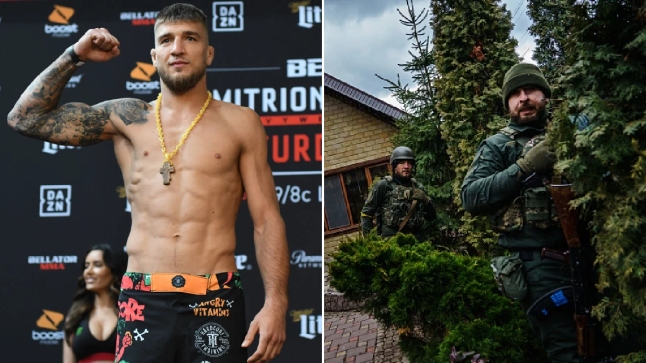
When conflict erupted in his homeland, Amosov didn’t issue statements from afar or rely on symbolic gestures. He went home. He put his career on pause and joined Ukraine’s territorial defense forces, witnessing firsthand what war actually looks like — the fear, the destruction, and the permanent consequences that come with it. Those experiences now shape how he views his profession, and they leave little room for metaphor.
Standing in front of reporters after his win, Amosov spoke plainly. War, he explained, is not a contest with rules, referees, and a guaranteed walk back to the locker room. War is chaos. People die. Friends disappear. Homes are destroyed. There is no tap-out, no medical stoppage, and no applause at the end. To him, equating a professional sporting event — no matter how violent — to that reality cheapens the suffering of those who endure it.
The timing of his comments made them even more powerful. Amosov’s performance inside the cage was dominant, controlled, and clinical. He didn’t scrape by or survive a grueling battle; he imposed his will and finished the fight decisively. If anyone had earned the right to indulge in the usual post-fight bravado, it was him. Instead, he chose to challenge a mindset ingrained in MMA culture.
His words landed hard across the community. Some fighters and fans praised him for injecting perspective into a sport that often glorifies struggle without context. Others pushed back, arguing that “war” is simply shorthand for mental and physical adversity, not a literal comparison. But Amosov’s stance forced a rare moment of reflection. When someone who has seen actual combat speaks, metaphors start to feel hollow.
Amosov’s career path already sets him apart. Before arriving in the UFC, he built a reputation as one of the most dominant welterweights outside the promotion, compiling an unbeaten run and capturing a major world title. His style — grounded in elite grappling, relentless pressure, and discipline — reflects years of refinement rather than reckless aggression. That same discipline now defines how he speaks about the sport.
He isn’t condemning MMA. In fact, Amosov is deeply respectful of fighting as a craft. He understands sacrifice, pain, and risk better than most. But he refuses to blur the line between voluntary competition and involuntary survival. Fighters choose to step into the cage. Soldiers and civilians in war zones do not get that choice.
What makes Amosov’s comments resonate is their authenticity. He isn’t performing outrage or chasing headlines. There’s no hint of marketing strategy in his tone. He speaks like someone who has seen too much to romanticize suffering. In a sport often driven by self-promotion, that sincerity is rare.
His stance also reflects a broader maturity within MMA, where athletes are increasingly willing to push back against old tropes. As the sport grows globally, fighters bring different cultural perspectives and life experiences into the spotlight. Amosov’s voice represents a reminder that toughness doesn’t always need exaggeration — sometimes it needs honesty.
Ultimately, his message isn’t about policing language for the sake of it. It’s about respect. Respect for people whose lives are permanently altered by war. Respect for the difference between competition and catastrophe. And respect for reality over rhetoric.
As Amosov continues his UFC run, his performances will determine his place in the welterweight hierarchy. But regardless of wins and losses, he has already left a mark on the sport’s conscience. In saying what many won’t, he’s reminded the MMA world that while the Octagon is brutal, it is still a place of choice, control, and survival by design — not by chance.
For Yaroslav Amosov, that difference matters. And he’s not backing down from saying it.



Login with Email or Google
Be the first to comment!