The Greatest Heavyweight Fight That Never Happened: Fedor Emelianenko vs. Randy Couture
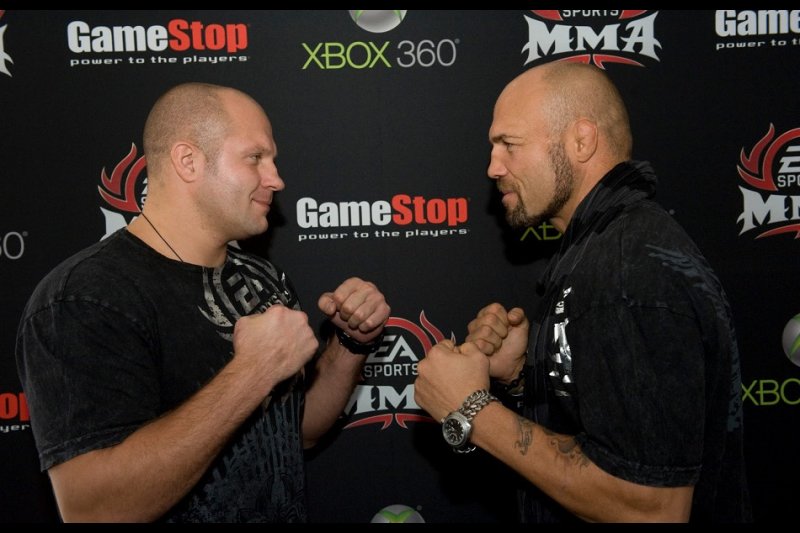
In the long history of heavyweight MMA, fans have argued endlessly about missed opportunities, timing gone wrong, and contracts that stood between legends. No story embodies that frustration more than the fight that never materialised: Fedor Emelianenko vs. Randy Couture. It wasn’t just a fantasy matchup — for a brief moment, it looked real. Negotiations, meetings, press buzz, and both men showing interest created one of the biggest “what if” scenarios in combat sports history. And if it had happened, the sport may have looked different forever.
To understand why this matchup meant so much, you have to understand who Fedor and Randy were at the exact time this fight was being discussed. Fedor, the unbeaten Russian heavyweight who tore through PRIDE, had an aura unlike anyone in the sport. Calm to the point of eerie, expressionless even in chaos, he blended brutal power with world-class sambo and grappling. He had just finished a run through Antônio Rodrigo Nogueira, Mirko Cro Cop, Mark Coleman, and everyone else thrown at him. From 2003 to 2010, he was the immovable peak of heavyweight MMA.

Their potential collision was more than hype. Couture pursued the fight publicly, even legally, at one point breaking away from the UFC briefly because he felt the matchup was slipping away. M-1 Global, Fedor’s management at the time, held firm on co-promotion demands. UFC President Dana White pushed back. Meetings happened, phone calls were made, and negotiations dragged on until the window closed. Fans were left with nothing but debates, highlight reels, and interviews that always ended with the same sigh: “It should’ve happened.”
But if it had happened, what would it have looked like?

From a stylistic standpoint, this was one of the most fascinating heavyweight clashes ever conceptualized. Fedor’s game revolved around explosive entries, deceptive footwork, quick hips, and devastating ground-and-pound once the fight hit the mat. His submissions came from nowhere. His punches, short and looping, were fast enough to catch heavyweights in mid-motion.
Couture’s strengths were different. His chain wrestling, dirty boxing, and ability to control fighters against the cage were unmatched. He neutralized size with angles, turned strength into imbalance, and weaponized cardio in a division rarely known for it. Couture’s best path wasn’t knocking Fedor out — it was grinding him, smothering him, and frustrating him over rounds.
If the fight had taken place in a cage, the early minutes would have revealed everything. Couture would immediately try to close distance, force Fedor’s back toward the fence, and wear on him with hooks to the body and shoulder pressure. Fedor’s response would be sharp — pivoting out, throwing quick counters, and threatening trips from the clinch instead of simply backing up.
On the ground, Fedor would have been dangerous from all positions. While Couture had legendary top control, Fedor’s hips were unpredictable. He could sweep, attack an arm, or explode back to his feet. Couture’s safest route would have been to pin Fedor to the fence, not the canvas, minimizing the Russian’s ability to create space.
In the ring — had it taken place under PRIDE rules — the odds would shift. Fedor dominated the ring environment. His cornering, angles, and ability to circle out were nearly perfect there.
So who might have won?
The most realistic outcome: Fedor by TKO or submission in the mid-to-late rounds. Couture’s path to victory was real — a grinding, suffocating decision — but that required preventing Fedor’s explosiveness and avoiding scrambles. Very few heavyweights ever did either.
But make no mistake: Couture would have made Fedor work harder than almost anyone of that era. It wouldn’t have been a blowout. It would have been a chess match at high speed, a legend pushing another legend beyond comfort.

Instead of a result, fans got a ghost — the greatest heavyweight fight that never happened. Yet in the minds of MMA fans, that matchup still lives on, forever debated, forever imagined, forever part of the sport’s mythology.
And maybe that’s why it endures. Because sometimes, the fights we never see become the ones we remember the most.




Login with Email or Google
Be the first to comment!