Shavkat Rakhmonov Sets the Record Straight: "Just Facts" in Welterweight Title Picture
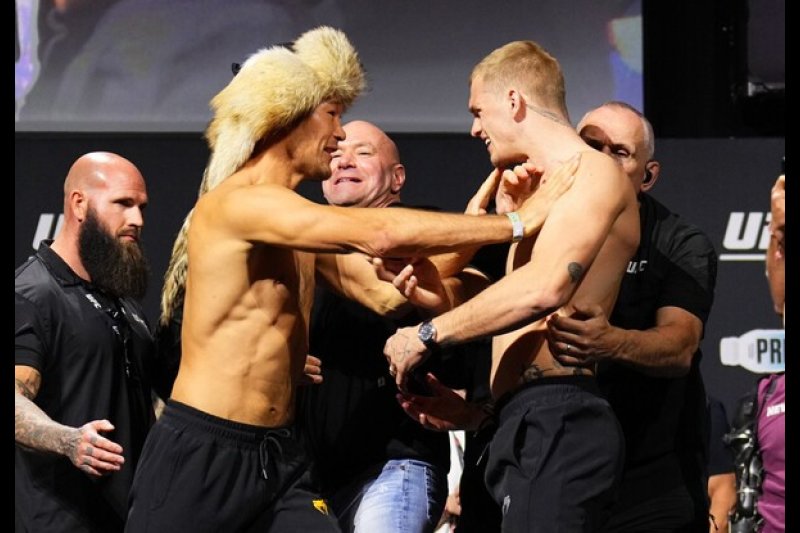
Shavkat Rakhmonov Sets the Record Straight: "Just Facts" in Welterweight Title Picture
The welterweight title picture has become increasingly murky following the conclusion of UFC Qatar, where Ian Machado Garry delivered an impressive victory over Belal Muhammad to catapult himself into the conversation for a title opportunity. Yet not everyone has accepted Garry's elevated status without question. Most notably, Shavkat Rakhmonov—the fighter many considered the rightful number-one contender before his injury-enforced sabbatical—has issued a measured but pointed response to Garry's claim to the top contender spot.
In a straightforward message posted across social media, Rakhmonov pulled back the curtain on the competitive realities that separate the two fighters. His statement was notably devoid of inflammatory rhetoric or personal attacks. Instead, the Kazakhstani welterweight employed what he described as "just facts," laying out a clinical assessment of Garry's qualifications and recent performance trajectory.
"Ian Garry lost to me while I was injured," Rakhmonov stated, referencing their December 2024 encounter at UFC 310. This point carries particular weight when evaluating title contention arguments. A loss to the current top contender, regardless of the circumstances surrounding that loss, remains a significant blemish on any fighter's resume. In championship-level competition, such losses typically carry implications for ranking considerations and title opportunities.
Rakhmonov continued his analysis: "He hasn't finished anyone in his last six fights." This observation speaks to the quality of victories and the manner in which Garry has secured them. In a sport where dominant performance is measured not just by winning but by how decisively a fighter imposes their will, a six-fight stretch without a finish represents a notable trend. For a fighter positioning himself as a world-title contender against Islam Makhachev—one of the most dominant and well-rounded champions in the history of the welterweight division—such a pattern becomes relevant context.
Finally, Rakhmonov referenced an early moment of vulnerability in Garry's recent performance: "Prates nearly stopped him." This reference to Andre Prates' competitive showing against Garry adds another layer to Rakhmonov's argument. That Garry faced adversity against a relatively lesser-known opponent adds nuance to his case as the clear number-one contender.
Rakhmonov concluded his assessment with a rhetorical question designed to let the evidence speak for itself: "Doesn't sound like a #1 contender to me."
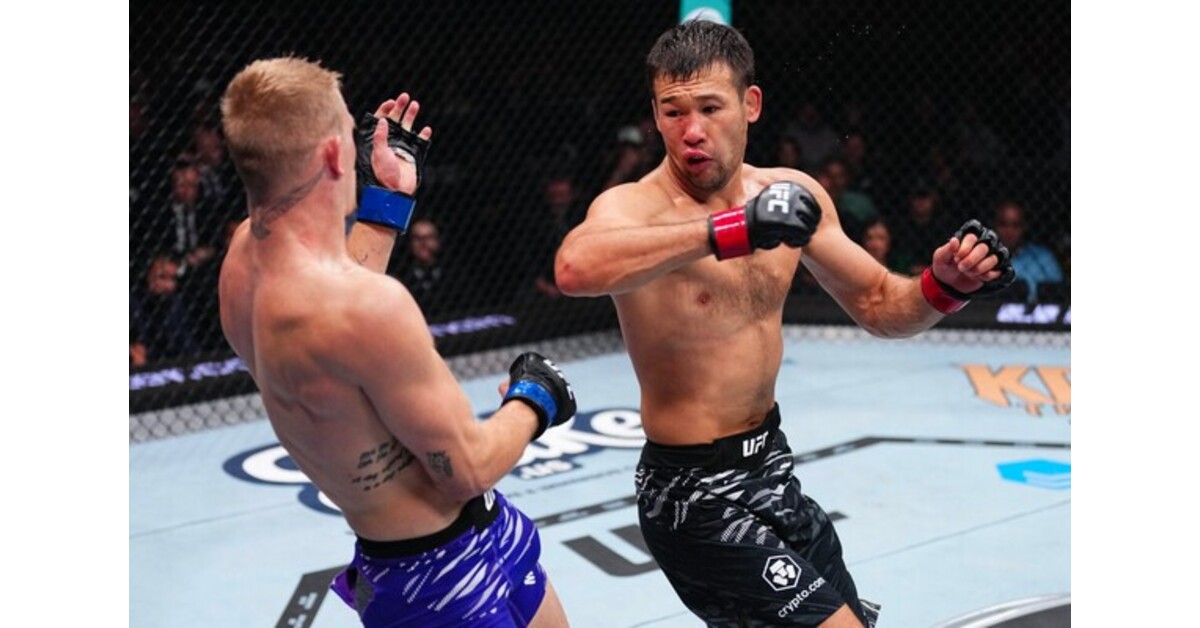
The context surrounding this exchange is crucial. Rakhmonov has spent 2025 recovering from significant injuries—a torn meniscus and ACL—sustained in the lead-up to and around his victory over Garry. During his absence, the welterweight landscape has shifted. Garry seized the opportunity to compile additional victories, most notably his win over Muhammad at UFC Qatar, which propelled him to a number-two ranking in the official UFC standings.
What Rakhmonov's statement illustrates is not bitterness, but rather a sober assessment of competitive standards. The welterweight title holder, Islam Makhachev, currently stands atop a division with multiple contenders vying for position. The next logical title challenger should embody consistent dominance, decisive victories, and a clear path to challenging the champion.
Rakhmonov's position is strengthforward: he defeated Garry when he was not at full health. Since that victory, he has remained sidelined. His timeline for return places him in early 2026, meaning a gap of approximately thirteen months will have passed between his last competition and his next appearance. This absence, while medically necessary, has allowed other fighters to advance their cases in the interim.
The welterweight division now stands at a crossroads. Multiple contenders—including Rakhmonov, Garry, and potentially others—are competing for the next opportunity to challenge Makhachev. The facts that Rakhmonov has laid out will undoubtedly factor into future matchmaking decisions. Whether the UFC determines that Garry deserves a direct path to the championship, or whether Rakhmonov's return warrants a high-profile interim bout to clarify the picture, remains to be determined.
What is clear is that Rakhmonov has made his position known without resorting to personal attacks or inflammatory commentary. In a sport often characterized by heated rivalry talk and manufactured drama, the calm, fact-based approach taken here stands out. It is also strategically sound—allowing the evidence of competitive performance to speak louder than any constructed narrative.
The welterweight title picture will continue to evolve. Rakhmonov's return in early 2026 will serve as a crucial moment in that evolution. Until then, his words—"just facts"—will linger as a reminder that in championship-level MMA, the record matters. The manner of victory matters. The quality of opposition matters. And perhaps most importantly, the context in which victories are achieved cannot be ignored when determining who truly deserves a shot at the throne.


Login with Email or Google
Be the first to comment!