Former UFC Heavyweight Jairzinho Rozenstruik Arrested on Domestic Violence Charges
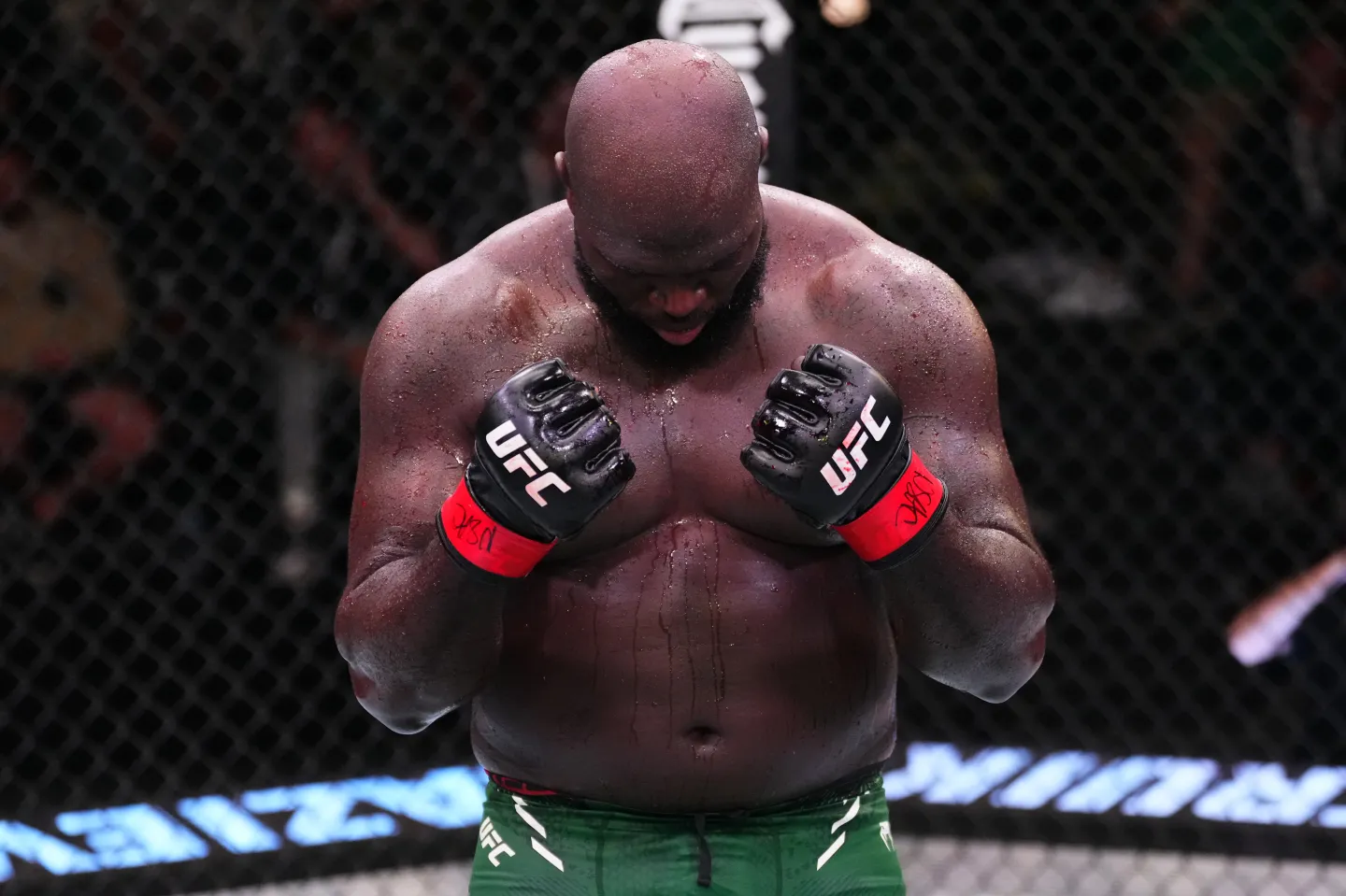
Former UFC heavyweight contender Jairzinho "Bigi Boy" Rozenstruik finds himself in serious legal trouble following his arrest in South Florida on domestic violence charges that include felony false imprisonment and battery. The 37-year-old Surinamese fighter, who once ranked as high as third in the UFC's heavyweight division, was taken into custody by Pembroke Pines Police Department on January 19, marking another troubling incident in what has become an increasingly common pattern of legal issues plaguing combat sports athletes.
The News: What Happened
According to police reports obtained from the Pembroke Pines Police Department, Rozenstruik was arrested following what officers initially responded to as a "suspicious incident" that was later determined to be domestic battery. The former UFC fighter faces two charges: a third-degree felony for false imprisonment with bond set at $2,500, and a first-degree misdemeanor for battery/domestic violence with a $1,000 bond.
The incident allegedly occurred during an argument between Rozenstruik and an unidentified female partner while they were driving to a storage unit. According to the police report, the confrontation escalated when the woman chose to ignore Rozenstruik during their dispute, which allegedly prompted him to slap her hand, causing her cell phone to fall to the car floor. When she retrieved the phone, Rozenstruik allegedly struck her hand again.
The situation deteriorated further when the woman attempted to exit the vehicle, and Rozenstruik allegedly grabbed her arm to prevent her from leaving. The woman told police she punched Rozenstruik multiple times in the head with a closed fist in self-defense. The argument continued after Rozenstruik parked the vehicle, and when he allegedly attempted to kiss her, she declined and called him "a nasty beast."
This comment apparently angered Rozenstruik, who then allegedly bit her right bicep against her will. The incident didn't end there, as police reports indicate Rozenstruik moved the car to another location where the argument continued, and once again prevented the woman from exiting the vehicle by grabbing her arm.
Physical evidence supported the woman's account, with police documenting visible bite marks on her right bicep, redness on both forearms, and bruising under her right eye. Officers described Rozenstruik as uncooperative during their initial contact with him, though he eventually submitted a written statement to police claiming the woman had punched him.
Adding another layer of complexity to Rozenstruik's legal troubles, he was also placed on a 48-hour immigration hold on January 20, one day after his arrest. This hold suggests potential issues with his immigration status that could complicate his case further.
The Context: From Rising Contender to Legal Troubles
Jairzinho Rozenstruik's arrest represents a dramatic fall from grace for a fighter who once seemed destined for heavyweight title contention. The Surinamese knockout artist burst onto the UFC scene in February 2019 with devastating power that earned him comparisons to some of the division's most feared strikers.
Rozenstruik's UFC career began with a remarkable run that saw him score spectacular knockouts over notable veterans. His most memorable victory came against Alistair Overeem at UFC on ESPN 7 in December 2019, where he landed a perfectly timed right hand with just four seconds remaining in the fifth round, snatching victory from the jaws of defeat in what many considered one of the most dramatic finishes in heavyweight history.
The victory over Overeem, combined with earlier wins over Junior dos Santos and other established heavyweights, catapulted Rozenstruik to the number three ranking in the UFC's heavyweight division. His knockout power and timing made him a legitimate threat to anyone in the division, and many expected him to challenge for the title in the near future.
However, Rozenstruik's momentum began to stall when he faced elite-level competition. A unanimous decision loss to Francis Ngannou in May 2020 exposed some defensive vulnerabilities, and subsequent defeats to Ciryl Gane and other top contenders revealed that while his power remained elite, his overall skill set had gaps that prevented him from reaching championship level.
Despite these setbacks, Rozenstruik remained a dangerous fighter capable of ending any fight with a single punch. He compiled a respectable 9-6 record during his UFC tenure, with notable victories that showcased his devastating knockout ability. However, his final UFC appearance came in February 2024 at UFC Fight Night in Riyadh, Saudi Arabia, where he suffered a decision loss to Sergei Pavlovich.
The UFC's decision to release Rozenstruik came as a surprise to many, given that he was 2-1 in his final three fights and remained a popular draw due to his finishing ability. The release appeared to be part of the promotion's broader roster management strategy rather than performance-based, as Rozenstruik was still capable of competing at a high level.
Following his UFC release, Rozenstruik found a new home with Dirty Boxing Championship (DBX), where he quickly captured the heavyweight title with a pair of brutal knockout victories over regional opponents. These performances demonstrated that his power remained intact and suggested he could still be a factor in major promotions if given the opportunity.
The Analysis: Pattern of Violence in Combat Sports
Rozenstruik's arrest adds to a troubling pattern of domestic violence incidents involving combat sports athletes that has become increasingly prominent in recent years. The intersection of combat sports training, which involves learning to inflict violence professionally, and personal relationships has created a complex dynamic that the MMA community continues to grapple with.
The specific nature of the charges against Rozenstruik - false imprisonment and battery - suggests a pattern of controlling behavior that extends beyond a single moment of violence. False imprisonment, which involves restraining someone against their will, indicates a deliberate attempt to control the victim's movements and freedom, while the battery charge addresses the physical violence alleged in the incident.
The detailed police report paints a picture of escalating aggression, beginning with relatively minor physical contact (slapping the phone from her hand) and progressing to more serious violence (biting) and controlling behavior (preventing her from leaving the vehicle). This escalation pattern is consistent with domestic violence research that shows how controlling behaviors often accompany physical abuse.
What makes this case particularly concerning is the alleged use of biting as a form of violence. While biting might seem less serious than striking, it represents a particularly intimate and degrading form of assault that often carries significant psychological trauma for victims. The fact that this allegedly occurred after the victim rejected Rozenstruik's attempt to kiss her suggests the violence may have been motivated by rejection and a desire to assert dominance.
The immigration hold adds another dimension to Rozenstruik's legal troubles. As a foreign national competing in the United States, any criminal charges can have severe consequences for his immigration status, potentially affecting his ability to remain in the country or return if he leaves. This could have career-ending implications for a fighter who has built his professional life around competing in American promotions.
The Implications: Multiple Stakeholders Affected
For Rozenstruik Personally
The immediate consequences for Rozenstruik are severe and multifaceted. Beyond the potential criminal penalties if convicted - which could include jail time, probation, and mandatory counseling - he faces the possibility of immigration consequences that could end his fighting career in the United States.
The charges also carry significant reputational damage that could affect his marketability as a fighter. While combat sports has historically been more tolerant of athletes with legal troubles than other professional sports, domestic violence charges carry particular stigma that can make promoters hesitant to book fights.
If convicted of the felony false imprisonment charge, Rozenstruik could face up to five years in prison under Florida law, though first-time offenders often receive lighter sentences. The misdemeanor battery charge carries a potential penalty of up to one year in jail and fines.
For Dirty Boxing Championship
DBX, where Rozenstruik currently holds the heavyweight title, faces a difficult decision regarding their champion. The promotion must balance their investment in Rozenstruik as a marquee fighter against the potential backlash from being associated with domestic violence allegations.
Smaller promotions like DBX often lack the resources and legal infrastructure to handle these situations as comprehensively as major organizations like the UFC. They may be forced to make quick decisions about Rozenstruik's status without the benefit of extensive legal counsel or public relations support.
For the Broader MMA Community
This incident adds to ongoing discussions about domestic violence in combat sports and what responsibilities promotions, athletic commissions, and the broader MMA community have in addressing these issues. The frequency of such incidents has led to calls for more comprehensive background checks, mandatory counseling programs, and stricter disciplinary measures.
The case also highlights the need for better support systems for combat sports athletes, including mental health resources and education about healthy relationships. The transition from active competition to retirement can be particularly challenging for fighters, and those struggling with career setbacks may be at higher risk for personal problems.
For Victims and Advocacy Groups
Domestic violence advocacy groups often point to high-profile cases like this as opportunities to educate the public about the realities of domestic abuse. The detailed nature of the allegations in this case - including the escalating pattern of control and violence - provides a clear example of how domestic violence typically unfolds.
The victim's decision to contact police and provide detailed statements demonstrates courage that advocates hope will encourage other victims to come forward. However, the public nature of the case also means the victim may face unwanted attention and potential harassment from fans or others connected to the defendant.
What to Watch: Future Developments
Several key developments will determine how this case unfolds and what consequences Rozenstruik ultimately faces:
Legal Proceedings
The most immediate concern is Rozenstruik's court appearances and the resolution of the immigration hold. If he can satisfy bond conditions, he may be released pending trial, but the immigration hold could complicate this process. His cooperation with authorities and any plea negotiations will significantly impact the ultimate outcome.
The availability of additional evidence, such as the CCTV footage mentioned in police reports or potential witness testimony, could strengthen or weaken the prosecution's case. The defense will likely focus on inconsistencies in witness statements and challenge the severity of the alleged injuries.
Immigration Consequences
The 48-hour immigration hold suggests potential issues with Rozenstruik's legal status in the United States. Depending on his visa status and the outcome of the criminal charges, he could face deportation proceedings that would effectively end his American fighting career.
Immigration consequences for criminal convictions can be severe and often carry longer-lasting impacts than the criminal penalties themselves. Even if Rozenstruik avoids jail time, a conviction could make him inadmissible to the United States in the future.
Career Implications
DBX will likely need to make a decision about Rozenstruik's heavyweight title and future with the promotion. They may choose to strip him of the title immediately, suspend him pending the outcome of legal proceedings, or wait for more information before taking action.
Other promotions will be watching closely to see how this case develops before making any decisions about potentially signing Rozenstruik in the future. A conviction would likely make him untouchable for major promotions, while an acquittal might allow for a comeback depending on public perception.
Broader Industry Response
This case may prompt renewed discussions about domestic violence policies in combat sports. Athletic commissions, promotions, and fighter organizations may consider implementing stricter background check requirements or mandatory education programs.
The MMA media and fan community's response will also be worth monitoring, as public pressure can influence how promotions and athletic commissions handle these situations. The detailed nature of the allegations may generate more negative reaction than cases with less specific or severe accusations.
Historical Context and Precedent
Rozenstruik's case fits into a troubling pattern of domestic violence incidents involving combat sports athletes. High-profile cases involving fighters like Jon Jones, Anthony Johnson, and others have highlighted the intersection between combat sports training and personal violence.
The combat sports community has struggled to find the right balance between supporting athletes through personal difficulties and taking a strong stance against domestic violence. Some promotions have implemented zero-tolerance policies, while others have taken a more case-by-case approach.
The severity of the charges against Rozenstruik - particularly the felony false imprisonment - puts his case on the more serious end of the spectrum. Unlike cases involving single incidents of violence, the allegations suggest a pattern of controlling and escalating behavior that courts and promotions typically view more seriously.
Conclusion
Jairzinho Rozenstruik's arrest on domestic violence charges represents a significant fall from grace for a fighter who once seemed destined for heavyweight title contention. The detailed allegations paint a disturbing picture of escalating violence and controlling behavior that extends far beyond the single moment of conflict.
The case highlights ongoing issues within combat sports regarding domestic violence and the need for better support systems for athletes transitioning through career challenges. For Rozenstruik personally, the consequences could be career-ending, particularly if immigration issues compound his legal troubles.
As this case proceeds through the legal system, it will serve as another test of how the combat sports community addresses domestic violence among its athletes. The detailed nature of the allegations and the severity of the charges make this a case that will likely influence future policy discussions and set precedents for how similar situations are handled.
The ultimate resolution of Rozenstruik's case will depend on the strength of the evidence, the effectiveness of his legal representation, and the decisions made by prosecutors regarding plea negotiations. Regardless of the legal outcome, the reputational damage and potential immigration consequences suggest that Rozenstruik's days as a prominent combat sports athlete may be numbered.
For the broader MMA community, this case serves as another reminder of the work that remains to be done in addressing violence outside the cage and supporting both athletes and victims in creating healthier relationships and communities.





Login with Email or Google
Be the first to comment!